Masterbatch for plastic coloring delivers exceptional color consistency, optimal dispersion, and built-in additive protections for flawlessly uniform, molded-in colored components.
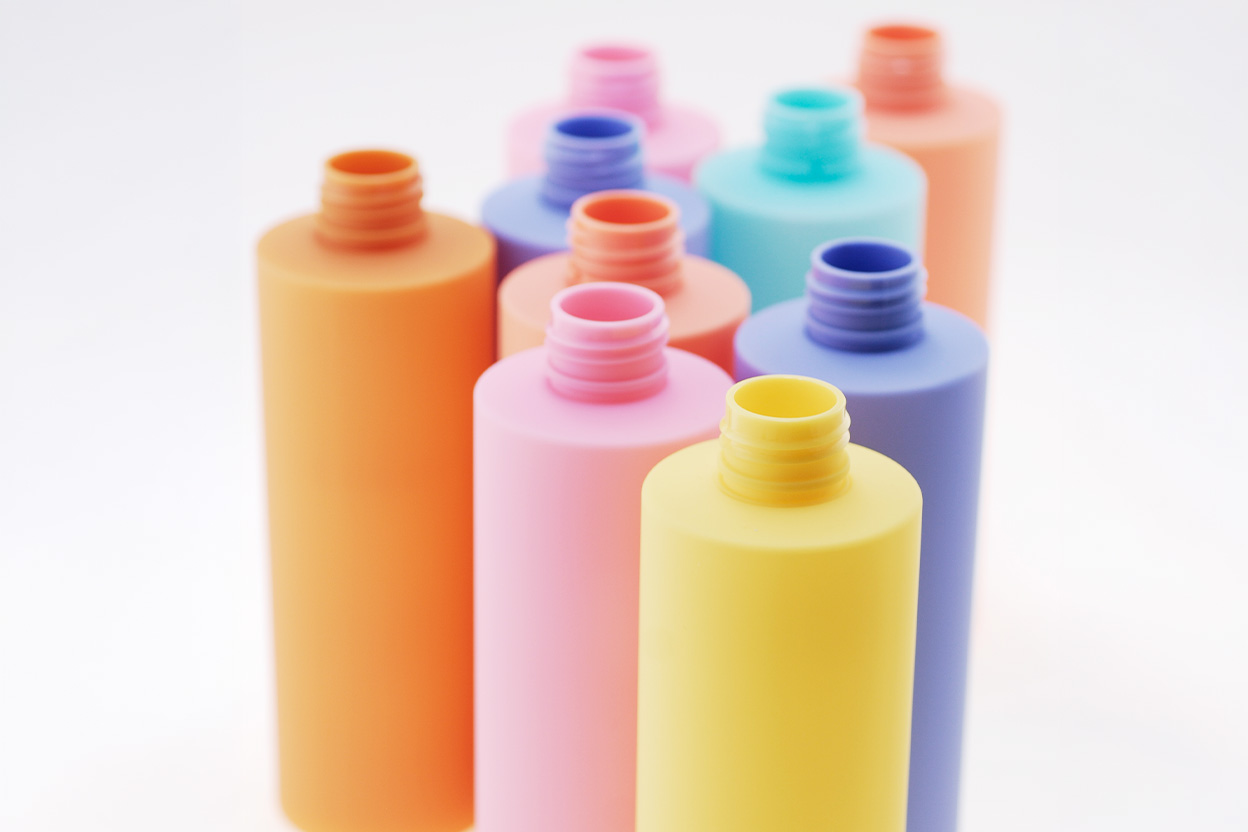
There are two methods of coloring plastic components: externally and internally.
External coloring refers to print, coating, plating, and many decoration techniques.
Internal coloring refers to coloring plastics by adding colorants during the molding process. Unlike external coloring, plastics is colored evenly up to the inside, because colorants are mixed with plastics.
When enumerating the advantages of using plastics over other materials such as metals, ceramics, and wood, one of the items that inevitably comes up is molded-in color.
Colorants used for internal coloring are generically called Plastic Colorants.
There are different colorant categories include dry color (raw pigment), liquid color, paste dispersion, compounded color, and masterbatch. At SRP, we use masterbatch towards desirable color expectations. There are several benefits with masterbatch as a plastic colorant.
Connect with SRP's packaging specialists for samples, MOQs, and custom decoration options.
.png)
